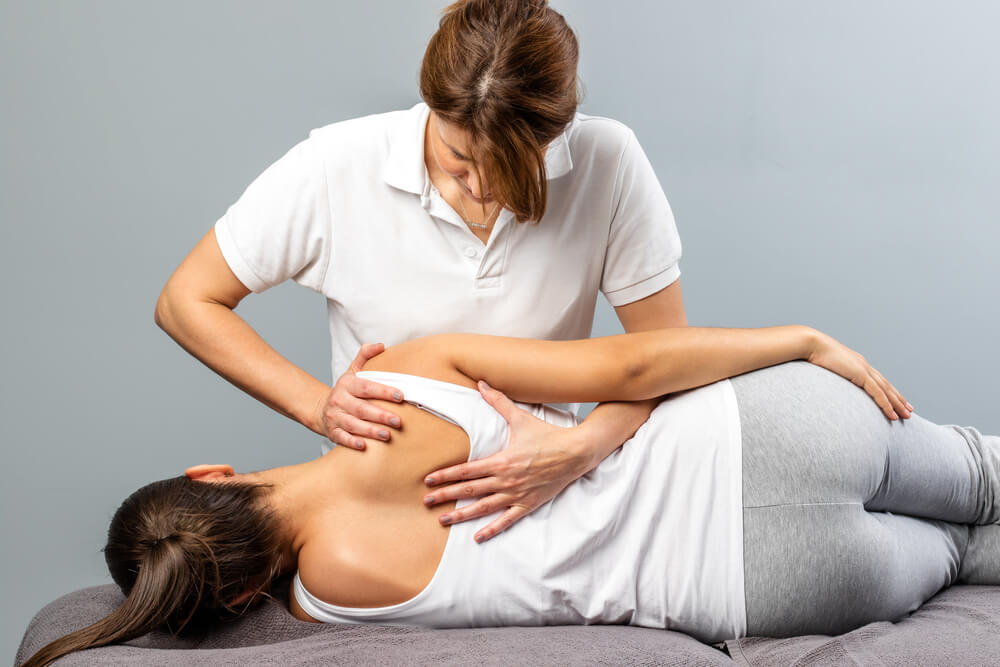
Spine problems are no longer limited to older adults. From long sitting hours to poor posture and stress, more people are now dealing with back pain, slipped discs, and spinal discomfort at a younger age.
If you’re searching for the best treatment for spine problems, you’re not alone and more importantly, you’re asking the right question.
Here’s the truth:
There is no “one-size-fits-all” treatment.
The best treatment depends on the root cause of your spine issue.
In this guide, we’ll break down the most effective treatments, when to choose them, and what actually works for long-term recovery.
Understanding Spine Problems (Before Choosing Treatment)
Your spine is a complex structure made up of:
- Vertebrae (bones)
- Discs (shock absorbers)
- Nerves
- Muscles and ligaments
When any of these components are affected, it can lead to:
- Lower back pain
- Neck stiffness
- Sciatica (nerve pain)
- Slipped or herniated disc
- Postural issues
Identifying the exact cause is the first step toward choosing the best treatment for spine conditions.
What Is the Best Treatment for Spine Problems?
Let’s get straight to it the most effective treatments are those that target the root cause, not just symptoms.
1. Physiotherapy (Most Recommended Treatment)
Physiotherapy is often considered the best treatment for spine problems and for good reason.
Why it works:
- Strengthens weak muscles
- Improves flexibility and mobility
- Corrects posture
- Reduces pain naturally
At Dr. Roshan Jha’s clinic, physiotherapy programmes are tailored based on each patient’s condition, ensuring faster and safer recovery.
Best for:
- Chronic back pain
- Postural issues
- Early-stage disc problems
2. Chiropractic Care (For Alignment and Nerve Relief)
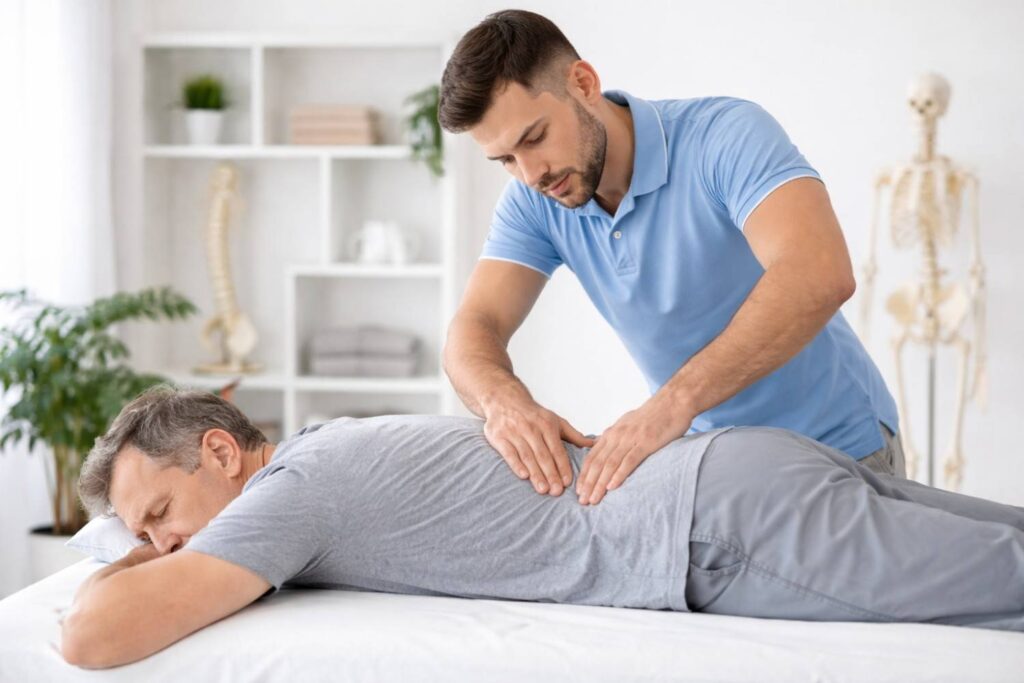
Chiropractic treatment focuses on spinal alignment.
Benefits:
- Relieves pressure on nerves
- Improves spinal movement
- Reduces stiffness and pain
Many patients experience quick relief, especially those with misalignment or nerve compression.
Best for:
- Neck pain
- Lower back pain
- Sciatica
- Manual Therapy & Spinal Mobilization
Hands-on techniques used by experts to improve movement.
What it does:
- Releases tight muscles
- Improves joint mobility
- Reduces inflammation
This is highly effective when combined with physiotherapy.
Best for:
- Muscle stiffness
- Limited movement
- Myofascial pain
4. Exercise Therapy & Rehabilitation
Movement is medicine when done correctly.
Key benefits:
- Strengthens core muscles
- Supports spine stability
- Prevents future injuries
A structured rehabilitation plan ensures long-term results.
Best for:
- Recovery after injury
- Preventing recurrence
- Improving overall spine health
5. Pain Management Techniques
Sometimes, pain needs to be controlled before deeper treatment.
Options include:
- Heat and cold therapy
- Electrotherapy
- Dry needling
These provide temporary relief but should always be combined with corrective treatments.
6. Lifestyle and Posture Correction (Often Ignored but Critical)
You can’t fix your spine if your daily habits are damaging it.
Important changes:
- Sit with proper posture
- Avoid long sitting hours
- Use ergonomic chairs
- Stay active
Small changes = Big results over time
7. When Is Surgery Needed?
Let’s be clear, surgery is rarely the first option.
It is only recommended when:
- Severe nerve compression
- Loss of movement
- No improvement with therapy
Even then, conservative treatments are always tried first.
How to Choose the Best Treatment for Spine Problems
Here’s a simple approach:
| Condition | Best Treatment |
| Mild pain | Physiotherapy |
| Posture issues | Exercise + correction |
| Nerve pain | Chiropractic + therapy |
| Chronic stiffness | Manual therapy |
| Severe cases | Medical consultation |
The right diagnosis = the right treatment.
Why Expert Care Makes All the Difference
Choosing the right clinic can completely change your recovery journey.
At Dr. Roshan Jha’s clinic, the focus is on:
- Root cause analysis
- Personalized treatment plans
- Combination therapy approach
- Long-term recovery, not quick fixes
Patients don’t just feel better, they heal properly.
Common Mistakes People Make (Avoid These)
- Ignoring early symptoms
- Self-medicating with painkillers
- Poor posture habits
- Skipping professional consultation
These mistakes often turn minor issues into serious spine problems.
Pro Tips for a Healthy Spine
- Stay active daily
- Stretch regularly
- Maintain a healthy weight
- Sleep on a supportive mattress
- Avoid heavy lifting without proper technique
Consistency is key.
FAQs
1. What is the best treatment for spine problems?
Physiotherapy is considered the best treatment for most spine problems as it addresses the root cause, improves mobility, and strengthens muscles for long-term relief.
2. Can spine problems be cured without surgery?
Yes, most spine problems can be treated without surgery using physiotherapy, exercise, and lifestyle changes. Surgery is only needed in severe cases.
3. How do I know if my spine problem is serious?
If you have severe pain, numbness, weakness, or difficulty moving, it may indicate a serious condition and requires immediate medical attention.
4. Which therapy is best for back pain?
Physiotherapy combined with manual therapy and posture correction is the most effective approach for treating back pain and preventing recurrence.
5. How long does it take to recover from spine problems?
Recovery time depends on the condition, but with proper treatment, most people see improvement within a few weeks to a few months.
Conclusion
So, which treatment is best for spine problems?
The answer isn’t a single solution; it’s the right combination of therapies based on your condition.
For most people, physiotherapy, chiropractic care, and lifestyle changes offer the best results without the need for surgery.
If you’re tired of dealing with recurring back pain or stiffness, don’t wait. The sooner you address the root cause, the faster you can return to a pain-free, active life.
Your spine supports you every day, it’s time you support it back.